Your cart is currently empty!
How Do You Break Into the Games Industry in 2025?
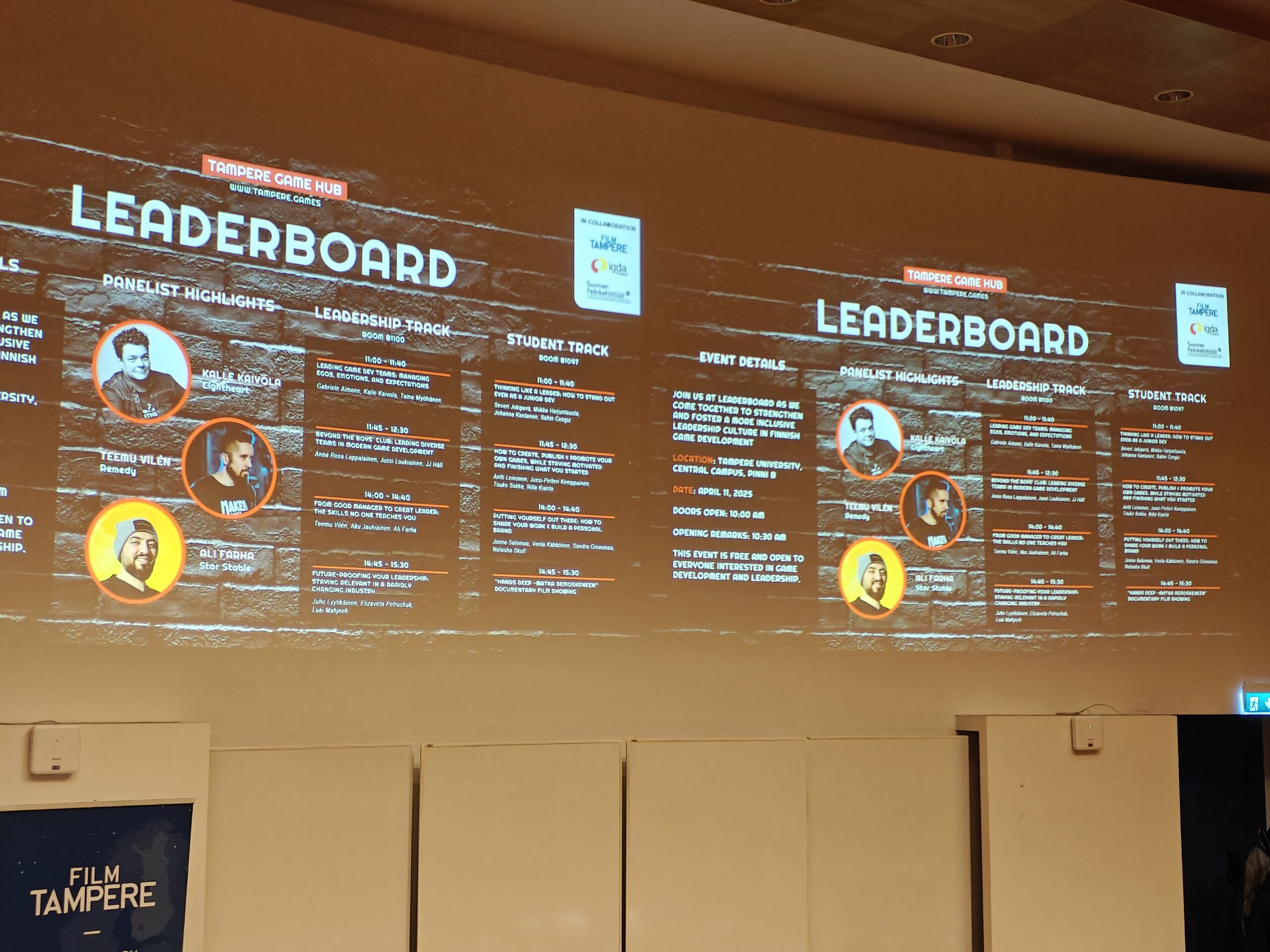
Lessons from LEADERBOARD Event Tampere, Finland April 11th 2025 (Student Track Edition)
I recently attended part of LEADERBOARD, a Finnish games industry event. With limited time, I focused on the student track — the grassroots side of game development. This isn’t the AAA space. It’s where people are hustling to get their first games out, their first jobs, or even just their first real feedback.
As someone coming from a quality and software background, I found it fascinating to see how early-stage devs and small studio leads think, build, and talk about their work. This post summarizes the most relevant takeaways — with added insight from a quality-focused perspective.
Before diving into the details, here’s a quick summary of the most relevant lessons I took from the event:
TL;DR: Key Game Industry Lessons for Beginners
- Don’t wait for perfection. Show your work early and often.
- Portfolios matter more than resumes. Include group projects.
- Big studios want specialists. Indies need generalists.
- Start marketing your game before it’s done.
- Leaders serve the team. Humor and empathy go a long way.
- Long hiring cycles are normal. Stay visible.
What Is LEADERBOARD, and Why Did I Attend the Student Track?
LEADERBOARD is a Finnish games industry event focused on leadership in game development. Organized by Tampere Game Hub, it brings together professionals, students, and aspiring developers to explore topics like team management, creative collaboration, and career growth.
Through panels, workshops, and networking, the event aims to build a better understanding of how leadership works in the Finnish game development community.
There were two tracks: one for established professionals (Leader Track) and one for early-career developers (Student Track). I chose the student track because I’m not an expert in the games industry. I wanted to see the entry-level reality — not just polished outcomes, but the messy, creative beginnings.
And it was worth it.
What Makes a Good Game Developer Portfolio in 2025?
A good portfolio tells a story. It shows what you’ve built — and how you built it.
Key traits of a strong game dev portfolio:
- Include links to playable demos, gameplay videos or walkthroughs.
- Highlight both solo and team projects. Studios want to see collaboration.
- Link your dev blog, YouTube, and other portfolio pages. Make it easy to explore your work.
- Update frequently. Show progress, not just polish.
Panelists emphasized: don’t wait to make something perfect before sharing it. Showing ongoing work signals commitment and openness to feedback.
How Do You Get Hired in the Games Industry?
This one came with a reality check.
“You might not hear back for two years. But apply anyway.”
Here’s what stood out:
- Hiring cycles are long. Studios keep a mental shortlist.
- Introduce yourself even if there are no open roles.
- Attend industry events — especially IGDA meetups — to make connections.
- If a company grows, they often reach out to people they already know.
Also: larger studios tend to hire specialists (shader experts, 3D artists, etc.) who aspire to be the best at their chosen area of expertise, while smaller studios look for generalists who can wear multiple hats.
Why Should You Share Your Work Before It’s Perfect?
Perfectionism is a trap. The longer you wait to show your work, the harder it is to grow.
One panelist put it plainly:
“Avoid the mindset that you need to work your project to a certain level before sharing it.”
This advice mirrors how modern software teams operate — with daily standups, short feedback loops, and constant iteration. In any tech role, and especially in games, you’ll need to get comfortable with showing work-in-progress and adapting quickly.
The takeaway: share your work early, and make it easy to find.
- Dev logs, blogs, or social posts showing your progress
- Behind-the-scenes videos or build walkthroughs
- Portfolio updates that reflect your latest skills
And here’s where it connects to hiring:
Studios build mental shortlists. They remember people who show up, apply, and keep showing progress. You might apply for a job today, meet some folks at an IGDA event, and they check your portfolio. Maybe they like your work, but they can’t hire yet.
Six months (or two years) later? They revisit your portfolio and see you’ve kept building. That consistency builds trust. They’re more confident in you — because they’ve seen your growth.
Being visible isn’t just about getting attention. It’s how people remember you when it’s time to hire.
What Does Good Game Project Planning Look Like?
Planning is less about control, more about survival.
Here’s the student-level advice that professionals still struggle with:
- If you think a project will take 6 months, plan for 12.
- Choose a scope that feels doable, then cut that in half.
- Build around milestones.
- Always have a version you’d be okay releasing if you had to stop.
One speaker framed it well:
“Prioritize so that if you have to cut the project short, you still have something to offer.”
This is especially important for small studios — there’s never enough time or money. One experienced panelist pointed out that choosing the right game to develop might be the most important decision in a successful project.
At first, that struck me as surprisingly business-minded. Don’t game developers build games out of passion?
But it makes sense. If you want your project to have a better shot at success, you build something that already has an audience. You don’t have to reinvent the wheel — you create something familiar, but do it a little better.
How Important Is Marketing for Indie Games?
Crucial. And almost always done too late.
Start marketing as early as possible — even before your first build.
Simple ways to market while building:
- Create a dev log and share your progress
- Record your process — people love behind-the-scenes content
- Ask YouTubers to test or preview your game when it’s close to release
- Reach out to Steam and other platforms — ask for a sale slot or front-page placement
It’s important to understand that marketing doesn’t mean advertising. It means building interest and growing an audience around your project.
If you’re an indie developer and release a game without an audience, it will be extremely difficult to get noticed. Two panelists shared that they bought ads and made promotional videos — but no one cared, because no one was following the project in the first place.
One panelist put it bluntly:
“Don’t be afraid to ask for help in marketing — and ask for free things from distributors, like sales slots from Steam.”
As a small indie developer, you’re not going to annoy anyone by asking. Your voice is already hard to hear in the noise of bigger studios’ marketing campaigns. You have to be persistent — and proactive.
What Surprised Me as a QA Professional?
Three things stood out.
1. The emphasis on humor and stress management
There was a surprising (and welcome) focus on building healthy, creative team cultures. Leaders were described not as decision-makers, but as assistants to everyone else. That attitude builds trust — which builds better teams, and better games.
This is also in line with modern software development practices, where team leads are seen more as facilitators. The leader’s job is to help the team perform at their best by removing blockers and creating a productive environment.
2. The casual approach to iteration and feedback
Young game devs seem to naturally understand that games must be tested in the wild, and that release doesn’t mean “finished.” That’s healthy. But there’s still a line — games can only be so broken at launch before the audience pushes back.
There are infamous examples of this. Cyberpunk 2077 comes to mind — a major title released far too early, with the expectation that it could be patched post-launch. Even if a game improves over time, the damage to trust and reputation is hard to undo.
3. No talk of setting up QA processes
This one didn’t surprise me — the panelists were mostly from small indie studios. Still, it was notable: there was little to no discussion of quality assurance beyond features shipped or cut.
The unspoken rule seemed to be: if it didn’t get implemented, it’s because there wasn’t time.
In my view, it would benefit these teams to understand that QA is more than testing, and that testing is more than testing the final product. While many of the development methods seemed inspired by agile practices, the QA mindset still felt waterfall — something tacked on at the end, or dropped when time runs out.
That’s a missed opportunity.
Final Thoughts: What Should Aspiring Devs Take Away?
- Start small, but start now.
- Share your work before it’s finished — feedback matters more than polish.
- Connect with people — in person, if you can.
- Be open, visible, and consistent.
If there’s one thing to take from the LEADERBOARD student track, it’s this:
You need to make your work visible — early, often, and in the right places.
Studios keep mental shortlists. They notice people who show up, share progress, and keep going. Being visible isn’t just about getting attention — it’s how people remember you when it’s time to hire.
That’s why we blog, post dev logs, or share what we’re learning. It helps us think more clearly, and it helps others see how we think. You don’t need a massive audience — just enough visibility to show you care about what you’re doing, and that you’re growing.
Whether you’re making games or testing them, visibility and consistency are what will eventually turn effort into opportunity.

Mikko H.
“As someone coming from a quality and software background, I found it fascinating to see how early-stage devs and studio leads think, build, and talk about their work.”